Thank you for visiting my blog!

Thank you for visiting my blog!

This blog is used to share information I find about the families I am researching. To see these family names click on the "My Families" tab. Please feel free to make comments, corrections, and ask questions here or on my Facebook page or go to the "About Me" tab to send an e-mail.

Reading this Blog

My posts can be accessed by the date posted from the column on the right. Blog posts containing specific surnames can be found by clicking on the names in the left column.

Line

Showing posts with label Artificial Intelligence. Show all posts

Tuesday, May 12, 2026

AI Citations: Fast Drafts, Not Always the Finished Product


This AI-created citation got the place of death and the source completely wrong. I provided the screen clipping from Ancestry.com and URL, then asked for a citation in Evidence Explained style. This was the result:

“
Vermont, U.S., Vital Records, 1909–2008,” database with images, Ancestry (https://www.ancestry.com/search/collections/61834/records/218119 : accessed 8 May 2026), death record for Luther K. Rawson; citing Vermont Department of Health.


One of the places where AI has saved me the most time is with citations.

That may sound like a small thing, but citations can take a tremendous amount of time. Sometimes my source list on a blog post is longer than my post. Between census records, probate files, deeds, newspapers, cemetery records, family papers, digital images, and archive collections, a short post can still require a long list of careful source citations.

A page from my OneNote citation database
Before using AI, I had already created what I thought was a pretty efficient system. I kept citation examples and formats in OneNote, copied the closest match, and edited the details to fit the record I was using. Compared with building each citation from scratch, that felt like a real time saver.

And it was.

But AI has made the process even faster.

Now, instead of starting cold or hunting through my saved examples, I can give AI the information I have and ask it to help shape the citation. Often, it gets me very close very quickly. 

But there is an important “but.”

AI-generated citations still need to be checked. Carefully.

Sometimes the issue is small. I may want to change a word, adjust the format, or add a missing detail. Sometimes AI leaves a blank because I did not give it enough information, and that is fair. It cannot cite what I did not provide.

Other times, though, I have found glaring mistakes. The example at the top of the post is exactly why I check. AI identified the wrong database and placed the death in Vermont, even though the record was for a death in New Hampshire.

That has not made me stop using AI. I still love it for citations. It saves me a tremendous amount of time. But I treat every AI citation as a draft, not a finished product. A helpful draft. A fast draft. Sometimes even a very good draft. But still a draft.


If you would like to learn more about the families I research, follow my Facebook page, where I share each post along with other genealogical finds.

Diana
© 2026

ChatGPT, response to prompt requesting an Evidence Explained-style citation from a screen clipping and URL for Luther K. Rawson’s Ancestry death record, 8 May 2026; privately held by author.

“New Hampshire, U.S., Death Records, 1678–1974,” database with images, Ancestry (https://www.ancestry.com/search/collections/61834/records/218119 : accessed 8 May 2026), entry for Luther K. Rawson, died 8 January 1876, Croydon, Sullivan County, New Hampshire; citing New Hampshire Division of Archives & Records Management, Concord, New Hampshire, “New Hampshire Death Records, 1650–1969.”

Friday, November 21, 2025

Friday's Photo: My Grandmother's Photo was NOT Restored by AI


In June, I set out to repair a badly damaged photograph of my grandmother, Myrtie Hairston Bryan. I uploaded the image to ChatGPT and asked it to restore the photo without altering the original coloring or her facial features. The result looked promising, and feeling satisfied, I labeled it “restored” and proudly shared it on my blog. My enthusiasm had been sparked after listening to Episode 25 of The Family History AI Show with Mark Thompson and Steve Little—though, in hindsight, I clearly missed an important point.

Restoration or Reconstruction? 

When I first ran my grandmother’s photo through Artificial Intelligence (AI), I thought I was seeing a careful repair job. The scratches and spots vanished, and her face appeared smoother and clearer than before. Only later did I realize the AI hadn’t really fixed the original image at all—it had recreated it.

AI studied the damaged image and generated new pixels to replace the missing details. The end result certainly looked like my grandmother, but it wasn’t the same photograph she carried home from the studio in the early 1900s. It was a modern, computer-generated version of that moment.

This difference matters. Just as we distinguish between an exact transcription and a “cleaned up” version of a document, we should be clear about whether a picture shows original evidence or an interpretation.

When we use AI to “improve” old photographs—whether by sharpening, recoloring, or filling in missing areas—we’re creating a new version. Those images should be clearly labeled, and the unaltered scan should always remain the authoritative copy. 

Moving Forward with AI 

I have removed the June 20th post because I don’t want someone to see that recreated image and upload it as a true restoration to sites such as Ancestry, where it would be copied and shared repeatedly.

I still appreciate what AI can do. It’s a tool I use daily for a wide range of tasks, including genealogy. However, when it comes to photographs, I’ll be much more cautious and look forward to the day when AI can truly repair a historical image rather than rebuild it.

My thinking about AI and photos has been shaped in part by conversations in the genealogy community—especially discussions from The Family History AI Show with Mark Thompson and Steve Little.

If you want to know more about the families I research, click here to like my Facebook page, where you will see each post and other genealogical finds. 

Diana

© 2025

Sources

“Episode 25: AI Image Generation Advances,” The Family History AI Show, (https://podcasts.apple.com/us/podcast/ep25-chatgpt-4o-transforms-image-generation-jarrett/id1749873836?i=1000712214261accessed 21 October 2025).

“Episode 27: Restoration or Recreation?” The Family History AI Show, (https://podcasts.apple.com/us/podcast/ep27-ai-image-restoration-concerns-perplexitys-future/id1749873836?i=1000717145783: accessed 21 October 2025).

Friday, April 25, 2025

Friday's Photo: The Thompson Brothers of Erath County An AI Fail


After comparing my father's photos with those of his brother's in Tuesday’s post, Buster vs. Dad – An AI Perspective, I’ve found myself on a new mission—revisiting my collection of unidentified photos with help from AI.

This photo of two young men was shared by a cousin, who identified them as Floyd William Thompson (1889-1968) and one of his brothers. 

Floyd had five brothers:
I uploaded the photo to OpenAI’s ChatGPT along with at least one confirmed image of each brother—except Claud. I’ve never come across a photo of Claud Thompson. I also provided their names and birth years. I've learned that AI performs better when I include some background information. 

AI Analysis

I first used ChatGPT 4o to upload photos and ask questions. I really liked this table created by AI. It made me consider details I might have overlooked. 


This model confidently identified Floyd as the standing figure, citing specific facial features and stance as evidence.

However, this AI automatically assumed the standing boy was older, despite the possibility to the contrary. It also made questionable observations, like claiming the seated boy had "less prominent ears"—which contradicts what's visible in the photograph. 

When I challenged certain conclusions, the AI adjusted its analysis to accommodate my input rather than defending its position with evidence. For example: 
  • With the initial comparison, AI wrote, "The seated boy is likely another Thompson brother, but doesn't clearly resemble Edd, nor Floyd in his later years."
  • When discussing birth years, AI responded, "Based on appearance, Claud Clarence Thompson (b. 1891) is a more likely candidate than Aaron."
  • When reminded that no photos of Claud existed for comparison, the AI response was "The seated boy now appears to be Edgar Richard Thompson rather than Claud."

This inconsistency prompted me to seek a second opinion from a custom GPT specializing in historical photo analysis, Mark Thompson’s Historical Photo Analyzer, available through OpenAI’s ChatGPT platform. This consultation provided excellent historical context and thorough comparative analysis, but yielded the exact opposite conclusion, identifying Floyd as the seated brother.


Conclusions

Given the conflicting results, I decided it was best to conclude this AI comparison. Moving forward, I'll continue using AI as a supplemental tool. In my last post, Buster vs. Dad – An AI Perspective, AI did an excellent job pointing out similar features that could be easily observed. Not so much with this project. What I learned is that AI can help me see things I might overlook, but it is not a replacement for my intuition, family knowledge, or careful comparisons. 

For now, I will share this post with my family and on the Erath County Genealogical Society Facebook page, in the hope of gaining more insight from others who might recognize the faces or have additional knowledge about this family. 

If you'd like to learn more about the families I research, click here to follow my Facebook page, where you can view each post and other genealogical discoveries. 

Diana

© 2025

ChatGPT, "Comparison and Identification of Floyd Thompson in Historical Photo; Analysis of Seated vs. Standing Boy," OpenAI (https://chat.openai.com : accessed 25 April 2025).

Mark Thompson’s Historical Photo Analyzer (GPT : ChatGPT, OpenAI), "Historical photo analysis customized for detailed image study and genealogy insights," analysis provided to user DB Quinn, 25 April 2025; privately held by DB Quinn, VA.

Thompson Family Photographs, digital images, privately held by DB Quinn, Virginia Beach, VA, 2025; scanned from original photographs shared with DB Quinn in 2001 by Juanita Gleghorn, Tom Thompson, and Nadine Waugh during a visit to Texas.

Tuesday, April 22, 2025

Buster vs. Dad – An AI Perspective

Buster and Dad in their early teens. 

I decided to use AI to help identify some of my unknown family photos. The first few results weren’t great—a boy was labeled as a girl, another as a man, a scratch was mistaken for a clothesline, and an attempt to create a collage ended with images that didn’t look like my family at all. 
But when I started using OpenAI’s ChatGPT to compare photos side by side, I finally began to get useful results.

Buster or Dad?

I have several children in photos that have always been in question—were they my father or his brother? My cousin, who originally had the photo collection, labeled all of them as “Buster.” Buster was my dad’s older brother, Hairston Albritton Bryan, born in 1906. My father, Whit Criswell Bryan, was born in 1920. While I’d already guessed that some of the photos were of Dad, there was always a bit of doubt. AI helped confirm what I’d suspected.

I started by uploading one of the questionable photos and simply asked, “Can you date this?”


AI responded with an analysis of the child’s clothing, shoes, and the overall photographic style—pointing out the sepia tone and the formal studio setup. Based on these features, the photo was dated to somewhere between 1910 and 1920.

I followed up with: “This has been identified as my Uncle Buster, who was born in 1906, but could it actually be my father, born in 1920?”

The response was clear:
“While it could be your father, the styling strongly favors your Uncle Buster (born 1906). Everything about the child’s appearance, the clothing, and the studio portrait setup points to the 1910–1912 range.”

I decided to go a step further. I uploaded another photo and asked, “Could this be the same child?”


AI responded by analyzing the clothing, backdrop, and photo mount, estimating a time frame of circa 1910-1912, which lines up closely with Buster’s childhood years.

It noted that both children had oval-shaped faces, strong jawlines, and similar eye placement and spacing. The resemblance was plausible, especially when considering age progression, fashion trends, and the photographic style. If the child in both photos was Buster, the timeline worked.


Next, I shared teen photos of Buster to see if there was a visible connection. AI noted strong continuity in features—especially eye shape, nose, and jawline—linking the child in the earlier photos to the teen in the later ones.

I added this photo and asked, “What do you think of this photo of my father—Buster’s younger brother, born in 1920? My cousin said it was Buster, but I know it’s Dad.” 


AI responded with, "The boy is dressed in a classic sailor suit with a wide collar and checkered tie, a style popular from 1915 to the early 1930s. His dark stockings and leather shoes complete the look. His straight, bowl-style haircut with a trimmed fringe was typical for boys in the early 1920s, especially before school age. Based on these details, the image likely dates to around 1923–1925, which fits perfectly for your father, born in 1920."


So I shared three known childhood photos of my father, and AI came back with, "These known photos of your father clearly show a consistent progression from babyhood to adolescence, with strong physical matches to the sailor-suit portrait. Between the features and the timeline, it’s very safe to say the child in the sailor suit is your father—not Buster."

I shared three more photos, thought to be of Dad or Buster, and received the expected results.  

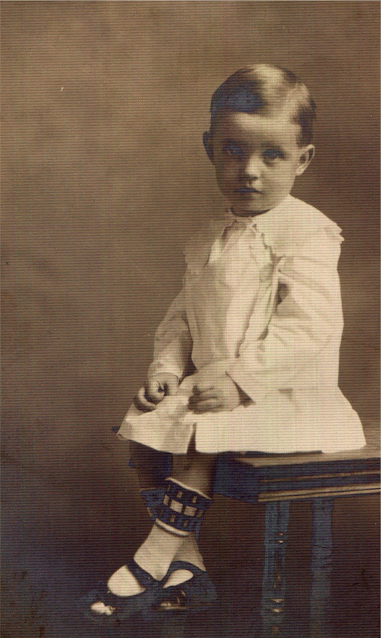
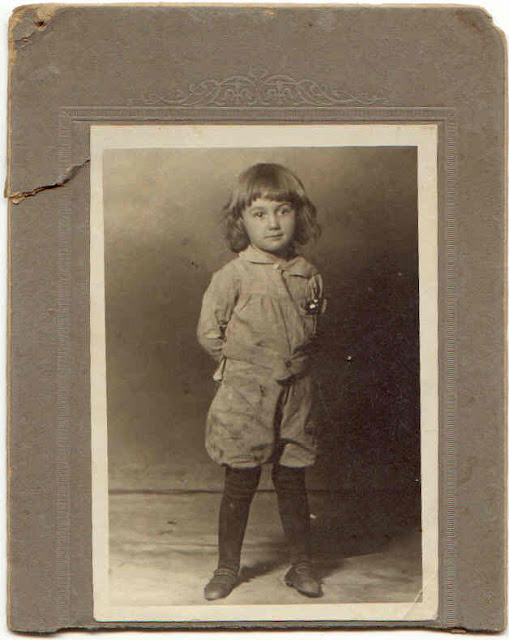
Dad - Whit Criswell Bryan


Buster's Baby Photo
Dad on a Donkey


Comparing Tools and Doing My Own Research

All of the photo analysis and comparisons in this article were generated using OpenAI’s ChatGPT. I also tried Anthropic’s Claude. Claude was more cautious. It provided similar comparisons of facial features and timelines, but was less willing to commit—recommending a second look and suggesting I talk to family members. 

And while ChatGPT provided useful insights, I didn’t accept everything without question. I did my own research to confirm the clothing and hairstyle information, especially since sources weren’t cited. After conducting my own research, I generally agreed with ChatGPT’s timelines for hairstyles and clothing; however, the sources I found indicated that these trends didn’t follow strict cutoffs—there was more overlap and variation than the AI responses suggested.

Final Thoughts

This process was a good reminder of the value of revisiting old photos with new tools and a fresh perspective. AI won’t solve every mystery, but in this case, it helped me ask better questions and, more importantly, confirm what I’d long suspected.

If you want to know more about the families I research, click here to like my Facebook page, where you will see each post and other genealogical finds. 

Diana

© 2025

Sources

Edward Zapletal, Publisher and Editor, More Dating Old Photographs 1840-1929 (Toronto: Moorshead Publishing, 2011).

Historic Boys' Clothing, "United States Sailor Suits: The 1920s," web page, Historic Boys' Clothing (https://histclo.com/style/suit/sailor/sailorus20.html : accessed 22 April 2025).

Jo B. Paoletti, “Clothing and Gender in America: Children’s Fashions, 1890-1920.” Signs 13, no. 1 (1987): 136–43 (http://www.jstor.org/stable/3174031: accessed 14 April 2025). 

Maryanne Dolan, Vintage Clothing 1880-1980 (Alabama: Books Americana Inc., 1995).  

Special Collections at the Richardson-Sloane Special Collections Center, "Saluting the Sailor Suit," blog entry, 2 July 2022, Primary Selections from Special Collections, blog (https://blogs.davenportlibrary.com/sc/2022/07/02/saluting-the-sailor-suit/ : accessed 22 April 2025).

TPR, "The Bowl Haircut," blog entry, 2 January 2020, The Past Recedes, blog (https://tpr76797.wordpress.com/2020/01/02/the-bowl-haircut/ : accessed 22 April 2025).


Tuesday, February 11, 2025

My Disclosure: AI is my Writing Assistant


For the last 14 years of my career, I worked in an office where writing was a key part of my job. I regularly prepared evaluation reports and communication plans for children with physical disabilities and other challenges that significantly impacted their communication abilities.

I collaborated closely with three other speech-language pathologists. Together, we critiqued and proofread each other’s reports, relying on free grammar-checking tools and Google searches to refine vocabulary and verify grammar rules. Our process was thorough. We discussed each report, offering suggestions for revisions and improvements. While I had the final say, my reports were never just my own; they represented a collaborative effort enriched by the team's insights and expertise.

  
A New Kind of Collaboration: My AI Disclosure

Now retired, I still write often. While I no longer need rigorous critiques, I still appreciate a second set of eyes before publishing. I’ve found the paid version of Grammarly helpful, but over the past year, I’ve turned to Artificial Intelligence (AI) for assistance—not just with grammar but also with refining content and improving overall readability. This has significantly sped up my writing process. 


AI has taken the place of my three coworkers, offering suggestions and refinements much like they once did. But the core remains the same—these are still my ideas and words, just with a little extra help along the way.

I added a full disclosure statement about my use of AI to my blog. You can read it in the Disclosures tab, where I explain how AI supports my writing process.


Posts Featuring AI


If you want to know more about the families I research, click here to like my Facebook page, where you will see each post and other genealogical finds. 

Diana

© 2025

"Writing Assistant,"AI-Generated Image, created by DALL·E via ChatGPT, October 2024; digital image, privately held by Diana Quinn, Virginia Beach, 2024.