Thank you for visiting my blog!

Thank you for visiting my blog!

This blog is used to share information I find about the families I am researching. To see these family names click on the "My Families" tab. Please feel free to make comments, corrections, and ask questions here or on my Facebook page or go to the "About Me" tab to send an e-mail.

Reading this Blog

My posts can be accessed by the date posted from the column on the right. Blog posts containing specific surnames can be found by clicking on the names in the left column.

Line

Showing posts with label Hairston. Show all posts

Thursday, January 1, 2026

Starting Again: 52 Ancestors in 52 Weeks — 2026

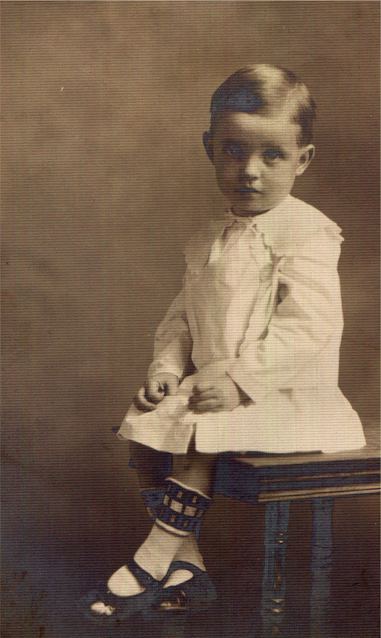
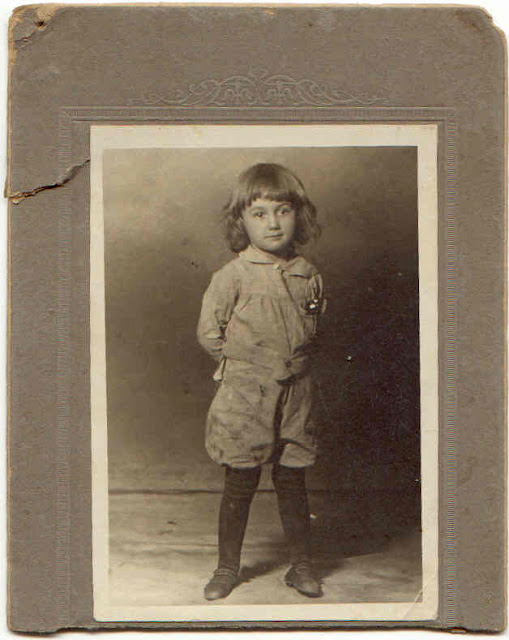
My mother, age five, and her sister, age four, sitting on a table in their home
at 92-43 214th Street in Queens Village, New York, in 1937.


My blog has been quiet for most of the last year. I’ve been busy as a full-time grandmother. Swim team, soccer, homework, piano lessons—and all the moments in between—required a change in priorities. 

As we move into 2026, I’m intentionally making room for genealogy again and committing time to learning and writing about my family through 52 Ancestors in 52 Weeks.

This will be my third time taking part in this challenge, in which you write about an ancestor each week. In 2014, I used the challenge to document the collateral families of my second great-grandfather, John L. Hairston. A later round in 2018 followed the prompts more closely. This time, I’ll use the prompts as inspiration but expect to deviate as the research unfolds.

My focus in 2026 will be on my mother’s family. My mother and her sister—now 93 and 92—are faithful readers of this blog, making this a meaningful place to spend my research time. I will begin with my fourth great-grandfather, Benjamin Reed, and follow his parents, siblings, children, and grandchildren, allowing the story to move through the Reed, Glynn, and Harvey families and forward to my grandmother’s generation.

I’m looking forward to returning to regular writing and to spending this year reconnecting with these families and their stories.


If you want to know more about the families I research, click here to like my Facebook page, where you will see each post and other genealogical finds. 

Diana

© 2026


Friday, November 21, 2025

Friday's Photo: My Grandmother's Photo was NOT Restored by AI


In June, I set out to repair a badly damaged photograph of my grandmother, Myrtie Hairston Bryan. I uploaded the image to ChatGPT and asked it to restore the photo without altering the original coloring or her facial features. The result looked promising, and feeling satisfied, I labeled it “restored” and proudly shared it on my blog. My enthusiasm had been sparked after listening to Episode 25 of The Family History AI Show with Mark Thompson and Steve Little—though, in hindsight, I clearly missed an important point.

Restoration or Reconstruction? 

When I first ran my grandmother’s photo through Artificial Intelligence (AI), I thought I was seeing a careful repair job. The scratches and spots vanished, and her face appeared smoother and clearer than before. Only later did I realize the AI hadn’t really fixed the original image at all—it had recreated it.

AI studied the damaged image and generated new pixels to replace the missing details. The end result certainly looked like my grandmother, but it wasn’t the same photograph she carried home from the studio in the early 1900s. It was a modern, computer-generated version of that moment.

This difference matters. Just as we distinguish between an exact transcription and a “cleaned up” version of a document, we should be clear about whether a picture shows original evidence or an interpretation.

When we use AI to “improve” old photographs—whether by sharpening, recoloring, or filling in missing areas—we’re creating a new version. Those images should be clearly labeled, and the unaltered scan should always remain the authoritative copy. 

Moving Forward with AI 

I have removed the June 20th post because I don’t want someone to see that recreated image and upload it as a true restoration to sites such as Ancestry, where it would be copied and shared repeatedly.

I still appreciate what AI can do. It’s a tool I use daily for a wide range of tasks, including genealogy. However, when it comes to photographs, I’ll be much more cautious and look forward to the day when AI can truly repair a historical image rather than rebuild it.

My thinking about AI and photos has been shaped in part by conversations in the genealogy community—especially discussions from The Family History AI Show with Mark Thompson and Steve Little.

If you want to know more about the families I research, click here to like my Facebook page, where you will see each post and other genealogical finds. 

Diana

© 2025

Sources

“Episode 25: AI Image Generation Advances,” The Family History AI Show, (https://podcasts.apple.com/us/podcast/ep25-chatgpt-4o-transforms-image-generation-jarrett/id1749873836?i=1000712214261accessed 21 October 2025).

“Episode 27: Restoration or Recreation?” The Family History AI Show, (https://podcasts.apple.com/us/podcast/ep27-ai-image-restoration-concerns-perplexitys-future/id1749873836?i=1000717145783: accessed 21 October 2025).

Friday, July 18, 2025

Friday's Photo: Second-Great-Grandparents

William Moore Criswell and Mary Ann Evans Criswell

Second great-grandparents are ideal for genealogy research. Some vital records and census data usually exist for them. I have found marriage licenses, census records, a few birth records, directories, newspaper articles, and so much more! And even though they all were born between 1793 and 1850, I have photos of six of them.  

Julia Harvey Glynn and 
daughter, Carrie

Everyone has 16 second great-grandparents. Each generation back doubles the number of direct ancestors: 2 parents, 4 grandparents, 8 great-grandparents, and 16 second great-grandparents. 
Of my 16 second great-grandparents, I know the first and last names of eleven. 

Olive Caroline Davis
The names of three of my maternal second great-grandparents are unknown. The remaining are listed below:

George Lullen Giddens and Luellen Bradshaw

My paternal second great-grandparents include the following, along with one unknown second great-grandmother:

William Moore Criswell and Mary Ann Evans
Peter Albritton and Hollon (last name unknown)


Reddick Bryan and Elizabeth Span Regan Bryan


Five of my second great-grandparents are still a mystery to me. But each blank spot on my tree is a reminder that the search is never really over. How many of your 16 can you name?


If you want to know more about the families I research, click here to like my Facebook page, where you will see each post and other genealogical finds. 

Diana

© 2025

Carrie Glynn and Julia Harvey Glynn, photograph, ca. 1885; scanned image, held in the photo collection of Diana Quinn, Virginia Beach, VA, 2025. Location of the original photo is unknown. 

Mary Ann Evans, photograph, no date; scanned image, from the privately held photo collection of Diana Bryan Quinn, Virginia Beach, VA, 2025. 

Olive Caroline Davis, photograph, no date; scanned image, from the privately held photo collection of Brenda and Mike Parker, 2001.

Reddick Bryan and Elizabeth S. Regan, photograph, abt 1855; scanned image, from the privately held photo collection of Diana Bryan Quinn, Virginia Beach, VA, 2025. 

William M. Criswell, photograph, no date; scanned image, from the privately held photo collection of Lena Stone Criswell, NM, 2001.

Tuesday, April 22, 2025

Buster vs. Dad – An AI Perspective

Buster and Dad in their early teens. 

I decided to use AI to help identify some of my unknown family photos. The first few results weren’t great—a boy was labeled as a girl, another as a man, a scratch was mistaken for a clothesline, and an attempt to create a collage ended with images that didn’t look like my family at all. 
But when I started using OpenAI’s ChatGPT to compare photos side by side, I finally began to get useful results.

Buster or Dad?

I have several children in photos that have always been in question—were they my father or his brother? My cousin, who originally had the photo collection, labeled all of them as “Buster.” Buster was my dad’s older brother, Hairston Albritton Bryan, born in 1906. My father, Whit Criswell Bryan, was born in 1920. While I’d already guessed that some of the photos were of Dad, there was always a bit of doubt. AI helped confirm what I’d suspected.

I started by uploading one of the questionable photos and simply asked, “Can you date this?”


AI responded with an analysis of the child’s clothing, shoes, and the overall photographic style—pointing out the sepia tone and the formal studio setup. Based on these features, the photo was dated to somewhere between 1910 and 1920.

I followed up with: “This has been identified as my Uncle Buster, who was born in 1906, but could it actually be my father, born in 1920?”

The response was clear:
“While it could be your father, the styling strongly favors your Uncle Buster (born 1906). Everything about the child’s appearance, the clothing, and the studio portrait setup points to the 1910–1912 range.”

I decided to go a step further. I uploaded another photo and asked, “Could this be the same child?”


AI responded by analyzing the clothing, backdrop, and photo mount, estimating a time frame of circa 1910-1912, which lines up closely with Buster’s childhood years.

It noted that both children had oval-shaped faces, strong jawlines, and similar eye placement and spacing. The resemblance was plausible, especially when considering age progression, fashion trends, and the photographic style. If the child in both photos was Buster, the timeline worked.


Next, I shared teen photos of Buster to see if there was a visible connection. AI noted strong continuity in features—especially eye shape, nose, and jawline—linking the child in the earlier photos to the teen in the later ones.

I added this photo and asked, “What do you think of this photo of my father—Buster’s younger brother, born in 1920? My cousin said it was Buster, but I know it’s Dad.” 


AI responded with, "The boy is dressed in a classic sailor suit with a wide collar and checkered tie, a style popular from 1915 to the early 1930s. His dark stockings and leather shoes complete the look. His straight, bowl-style haircut with a trimmed fringe was typical for boys in the early 1920s, especially before school age. Based on these details, the image likely dates to around 1923–1925, which fits perfectly for your father, born in 1920."


So I shared three known childhood photos of my father, and AI came back with, "These known photos of your father clearly show a consistent progression from babyhood to adolescence, with strong physical matches to the sailor-suit portrait. Between the features and the timeline, it’s very safe to say the child in the sailor suit is your father—not Buster."

I shared three more photos, thought to be of Dad or Buster, and received the expected results.  

Dad - Whit Criswell Bryan


Buster's Baby Photo
Dad on a Donkey


Comparing Tools and Doing My Own Research

All of the photo analysis and comparisons in this article were generated using OpenAI’s ChatGPT. I also tried Anthropic’s Claude. Claude was more cautious. It provided similar comparisons of facial features and timelines, but was less willing to commit—recommending a second look and suggesting I talk to family members

And while ChatGPT provided useful insights, I didn’t accept everything without question. I did my own research to confirm the clothing and hairstyle information, especially since sources weren’t cited. After conducting my own research, I generally agreed with ChatGPT’s timelines for hairstyles and clothing; however, the sources I found indicated that these trends didn’t follow strict cutoffs—there was more overlap and variation than the AI responses suggested.

Final Thoughts

This process was a good reminder of the value of revisiting old photos with new tools and a fresh perspective. AI won’t solve every mystery, but in this case, it helped me ask better questions and, more importantly, confirm what I’d long suspected.

If you want to know more about the families I research, click here to like my Facebook page, where you will see each post and other genealogical finds. 

Diana

© 2025

Sources

Edward Zapletal, Publisher and Editor, More Dating Old Photographs 1840-1929 (Toronto: Moorshead Publishing, 2011).

Historic Boys' Clothing, "United States Sailor Suits: The 1920s," web page, Historic Boys' Clothing (https://histclo.com/style/suit/sailor/sailorus20.html : accessed 22 April 2025).

Jo B. Paoletti, “Clothing and Gender in America: Children’s Fashions, 1890-1920.” Signs 13, no. 1 (1987): 136–43 (http://www.jstor.org/stable/3174031: accessed 14 April 2025). 

Maryanne Dolan, Vintage Clothing 1880-1980 (Alabama: Books Americana Inc., 1995).  

Special Collections at the Richardson-Sloane Special Collections Center, "Saluting the Sailor Suit," blog entry, 2 July 2022, Primary Selections from Special Collections, blog (https://blogs.davenportlibrary.com/sc/2022/07/02/saluting-the-sailor-suit/ : accessed 22 April 2025).

TPR, "The Bowl Haircut," blog entry, 2 January 2020, The Past Recedes, blog (https://tpr76797.wordpress.com/2020/01/02/the-bowl-haircut/ : accessed 22 April 2025).


Wednesday, March 26, 2025

Family Notes From The Baylor County Banner, Baylor County, Texas - June 5, 1919 (With a little help from AI)

The only mention of a family member in this issue was Joseph Oscar Noah. Joe, from Erath County, was a teacher at the Levelview School in Baylor County during the 1917-1918 school year. In addition, he did some teaching at the Plainview school. In newspaper articles, he is referred to as Professor J. O. Noah. These photos are some of the Baylor County photos from his album. He is pictured on the right. 

For Family: Joe was the son of Oscar Edward Noah, the son of Permelia Hairston and Joseph Sydney Noah. Permelia was the sister to my great-grandfather Phillip A. Hairston. Phillip and his wife, as well as their daughter, Myrtie, and her husband, Redic Bryan, were living in Baylor County when Joe arrived in August 1917. Phillip must have been pretty sick as both his sister, Permelia, and his sister, Mattie Thompson (both living in Erath County), visited in the next few months. Phillip died on 9 November 1917. Joe had photos in his album that I believe were taken on the day of Phillip Hairston's funeral. 

When I first posted this on my website 20 years ago, I had only a few articles from the Banner recorded for most of 1919my family was rarely mentioned that year. However, with the war over and soldiers returning home, I knew articles about them would be of interest. While revisiting the June 5th issue, two lengthy articles caught my attention, so I experimented with Artificial Intelligence (AI) to transcribe them.

AI proved to be a somewhat useful tool. I uploaded photos of the microfilmed articles, and within minutes, they were transcribed. Only about half of the text was accurateI noticed that both the quality of the original microfilm and my photos affected the results. I had to carefully compare the AI-generated transcriptions with the originals because the applications I used—ChatGPT and Claude—didn't simply indicate when they couldn't read the text. Instead, they filled in gaps with content that seemed to match the articles, even if it wasn't accurate. 


The articles below come from the June 5, 1919, issue of the Baylor County Banner. Some are briefly summarized, while others are presented in full.


Mr. Simon Bush who has been attending Simmons College is spending a few days with his friend, Mr. Riley Henson.

An article - Canning Beans and Beets by Bess Edwards, Home Demonstration 
Agent

Contents of the pack Joe Noah carried to Europe. 

Mr. and Mrs. B. K. Rhea of the Levelview community are very happy over the arrival of a fine girl at their home on Monday night. They already have a boy and now they have a pair. 

A fine boy was born to Mrs. Tom Riebeson June the third. Mother and baby getting along fine. 

The stork visited the home of M. and Mrs. Elmer Roe on the 23rd of May and left in their care a big boy. Mother and baby are doing fine (found in Ogden community news). 

The young people are overjoyed to see their former school teacher, Professor J. O. Noah, among them again. (found in Levelview community news).


Church Reception for Soldiers
The Christian church will entertain all of her soldier boys Friday evening at nine o'clock at the Christian church. Let's all show our love and appreciation of the boys by having every member of the church present. 


WITH THE SOLDIERS.
Mr. Clarence E. Copeland, who returned recently from France, left this week with his family to visit his people in Louisiana. He will doubtless be received with a great deal of honor, all of which will be well deserved.
Mr. Copeland landed in France in February, '18. He was in the draft age and refused to claim exemption on account of his family, as he figured they would be able to get along without him. Indeed, his wife was a party to the deal, saying she and the children could make a living while the husband and father fought the battle for liberty.

However, the soldier came near losing his life before the foreign shores were reached. He was on the ill-fated Tuscania, which was blown up near the English coast by a German torpedo, causing the death of more than 400 American lads.  As it happened, this was the only American transport to be torpedoed among all those that carried 2,000,000 men to the shores of France.  Mr. Copeland got away on a raft and was picked up by a destroyer. 

Being placed in the reserve corps, Mr. Copeland was not in the fighting until April, and not until May 24 did he go over the top for the first time. After that he was quite a veteran, spending a total of 66 days on the front line trench. He was in some very tight places and received several slight wounds. He was on the Alsace-Lorraine front, at Chateau-Thierry, Verdun, the Argonne and the Meuse. He was in the 125th regiment, 32nd division. He has had enough experiences to last him the rest of his life and says they need not get up any more wars for his special benefit. 

Rowe Shawver in the Fight.
Mr. Rowe Shawver was here long enough to shake hands with everybody and has gone to Wichita, probably to get in the oil game.

Rowe was in the 141st Reg. of the 36th Division. He went over in the first days of August and landed in the front line trench on Oct 8 being in the Champagne battle. He was in that fight until Oct 26th when he was sent to the hospital on account of illness. Two days later his division was relieved and was in the fighting no more.  However, when the armistice was signed they were on their way to the Argonne north of which a knockout blow was being planned by Marshal Foch. Rowe was in the hospital in Paris. 

A rumor had it here at one time that Mr. Shawver was badly wounded.  This might easily have happened, but all are glad the searching bullets failed of the mark. As Mr. Shawver lay in his shell hole, eight bullets passed through various parts of his equipment. Only one of them did him any harm. That was only a slight wound on the forearm which healed quickly and the sear of which is now nearly gone. This happened on the first time up and must have been slightly disconcerting to a raw recruit.

Mr. Shawver can tell plenty of experiences to prove that war is no cheerful game. And he doesn't especially care to partake of any more of it. On the night of October 10 the Germans sent over a lot of gas. Our troops were in a low place and Rowe says they had to wear their gas masks all night. It meant no sleep for most of the bunch. Shelling got to be such a usual thing that not much was thought of it, but when one hit within 10 feet of you and scattered dirt all over you - well a fellow naturally doesn't care to have his clothes gotten dirty in that manner. 

"Eph" Goss Back.
Mr. E. T. Goss will not soon finish shaking hands with all his friends since getting back from the land of France.  He has been gone a good long time, and Old Texas looks mighty fine to him. Mr. Goss landed in France March 26th, 1918, and played an important part in the licking of Heine. He did not carry a gun, but helped General Pershing a lot. He was located at Chamount (Haute-Marne), which was general headquarters and he frequently saw the great American commander. 

This camp was located about 125 miles southeast of Paris and Mr. Goss was up to the big city a time or two. He says the French reverence the place very much and they are very well satisfied to live most any old way if only [tear in paper] go to the Capitol city once or twice a year. 

But the prettiest place visited by our friend was Venice. The famed city of Italy, with its canal streets. It is as pretty as it is famous. He also was in Rome and Florence. He has a lot to tell about those people. He says it is of small purpose to compare the fighting qualities of the allies. They all fought with superhuman courage and skill and all should share alike in the glory.  

We are happy to state that Mr. Goss thinks he will continue this as his home, engaging probably in his former line, the abstract business. 

Ward Back Arrives.
Mr. A. W. Beck came in the other day from France. However, he had some people living up at Vera and cleared out for home before the Banner had an opportunity to talk with him much. He got through in good shape and, from his splendid looks he seems little the worse for his experience in France. We will get hold of him sometime and find out some of his experiences. 

Mr. Hershell High has accepted his old position at the Goostree barber shop. He has made it on around after a long and more or less exciting trip. 

Mr. Carter Howard was here this week from Wichita. He is now in the oil game, but says he intends going back to school this fall and keeping up his cartoon work. 

Mr. Frank Coufal came in Saturday from France, being accompanied from Wichita Falls by his sister, Mis Valasta. He was behind on farm work and has not been seen in the town since he came in. The Banner will get hold of him some of these days. 


BOMARTON NEWS
Mr. Frazier Parks came in on a furlough and brought his new bride. His visit and also his bride was a surprise for all, for we were not looking for him at this time.  But, we must say the surprise was agreeable to his many friends here. His wife was a Miss Dodd whom he married on his way home at Ryan, Oklahoma. She once lived at Cache Creek at which place Frazier formally knew her. 


FROM GERMANY
Raubach, Germany 
Dear Mr. Harrison:
I am dropping you a few lines to let you know that the Banner is read from top to bottom, over here on the Rhine, by a lad who doesn't live so very far from Seymour. Just received a copy today. It was sorter like sitting down and having a long chat with a Buddie from my home town. Even if it is a little stale sometimes before I get it, it's good news to me just the same. I didn’t realize how strong I was for it and the people who read it until I got over here. And a person does not know how much he loves the good old U. S. A. until he gets over here. My outfit is made up of boys from all over the Union and of course every man is of the opinion that his state is the best. I stick for the Lone Star, and especially for that little spot where the best of good people live. It's good enough for me.

Well, Mr. Harrison, I will tell you a little about “Over the line and across the Rhine.” After the armistice was signed all were curious to know what divisions would be in the army of occupation. On Nov. 14 we were informed that only the best trained divisions would represent the United States on the Rhine. We started out with sore feet to begin with, on account of chasing the Hun across the Meuse and out of the Argonne. The Belgians greeted us with great acclaim when we crossed that country. You could just see the joy in their eyes. In some of this country the people had suffered the dominion of the Boche for more than four years. In the marching the children carried the allied flag.

Next we passed through Luxemburg. There the Huns were only a short distance ahead and we had to rest up a week and allow them to get out of our way. This they were trying mighty hard to do, for there was no town large enough for those birds and the U. S. army.

On Dec. 1 we crossed the German line, with Old Glory waving in the breeze. We were all tired from the long march, but as the band played and the flags waved in the land that did not think the Yanks could fight, it was an inspiration to arouse patriotism to the highest pitch.

As we passed down the Moselle Valley, the roads were awful, and it was still raining everyday. We crossed the Rhine on the 3rd of December and came up the river to Bendorf where the old Ninth stayed until a short time ago. We are now occupying the place of the 32nd Division up in the mountains they having left for home. And from the news that is flying around here, I will soon be back shaking hands with you people once more. 

We were about a month on our hike and made a total of 245 miles. This is to say nothing of the mountains we climbed which made it seem twice that far. 

Well, good luck or something, it must have been mother's prayers led me through those fronts without getting a single scratch, excepting a little gas, which did not cause me to go to the hospital. I did not win the war, understand, but am proud to say I was with a bunch that did their bit. If there was ever anyone who has seen hell on earth it was the men of the old 2nd Division. They captured more prisoners and more guns than any other division in the A. E. F. That's saying a lot but it's true. We didn't have big writers with us like some of the outfits had, but our history is in Washington, D.C. 

Well, Mr. Editor, I will close before this becomes tiresome, if it has not already done so. Just continue to send the home town news and leave the rest to us. 

"A Buck" Private Robert Worth Buck, O. M. 9th Inf.


If you want to know more about the families I research, click here to like my Facebook page, where you will see each post and other genealogical finds. 

Diana

© 2025 


Baylor County Photos and WWI Pack, photographs, about 1918; scanned image, from the privately held photo collection of Carla Noah Stutsman, TX, 2014.

Baylor County Banner Graphic, The Baylor County Banner (Seymour, Texas), 27 September 1923, Vol. 28, No. 1, print; Texas State Library and Archives, Austin, Texas, 2025. 

The Baylor County Banner issues from 1919, microfilm images, The Baylor County Banner (Seymour, Texas), 1916. Microfilm titled "Baylor County Banner Jan 2, 1919, thru Dec 30, 1920," accessed from the privately held collection of D.B. Quinn.


Friday, March 14, 2025

Friday's Photo: DeRay Bryan at Virginia Beach, 1959


Diana Marie Bryan, Monte DeRay Bryan, and Myrtie Marie Bryan standing on the beach in 
front of the Steel Fishing Pier in Virginia Beach. DeRay and Marie arrived in Virginia
Beach (at that time, Princess Anne County) via bus from Borger, Texas to visit
my family in the summer of 1959.  


Monte DeRay Bryan was born on March 11, 1904, in Erath County, Texas—121 years ago this week. According to her birth affidavit, she was born five miles from Stephenville. Since her mother’s Hairston family lived in the Bethel community, I suspect she was born there, even though Bethel is more than five miles away.

The photo above shows me with Aunt DeRay (DeDe) and, next to her, Aunt Marie in 1959. This was the only time I met them in person—a shame, as I’ve since learned so much about them and wish I had the chance to spend more time with them.

DeRay began her teaching career in 1921, with her first job in the town of Corn, near her home in Seymour, Baylor County. In 1927 she was teaching in Amherst, Texas, when her mother passed away. The following year, she moved to Borger for a teaching position, as the pay was better and her family needed financial support. In 1928, her teenage sister left Seymour to live with her, likely struggling with the loss of their mother. Meanwhile, their older sister, Marie, stayed with their father and took care of my father, who was only six years old when their mother died.

My grandfather, Redic E. Bryan, faced severe financial struggles and, tragically, took his own life in 1929. At just 25 years old, DeRay became the family's primary provider. Marie managed the household but did not workshe had unintelligible speech and possibly other challenges. DeRay was then responsible for her teenage sister, and my father—now eight years old. I am sure all of them were struggling emotionally with the loss of their parents. DeRay’s once carefree, single life had completely changed.

DeRay never married and remained in Borger, Texas, where she lived with her sisters until her passing in 1987. Read much more about DeRay at this 2018 post #52ancestors Post Fourteen: Monte DeRay Bryan and see her 1924 Seymour Independent Free School District teaching contract (with dancing restrictions) at 52 Ancestors in 52 Weeks: #3 Monte DeRay Bryan.


Monte DeRay Bryan
1904 - 1987


If you want to know more about the families I research, click here to like my Facebook page, where you will see each post and other genealogical finds. 

Diana

© 2025

"Erath. Birth Affidavits April 1942–May 1942," images, FamilySearch (https://www.familysearch.org/ark:/61903/3:1:3QSQ-G9VH-26BD?view=fullText : accessed 9 Mar 2025), image 165 of 332.

Hutchinson County Historical Commission, "History of Hutchinson County, Texas: 104 Years, 1876-1980," Dallas: Taylor Publishing Company, 1980.

"Miss DeRay Bryan to Teach at Corn," The Baylor County Banner (Seymour, Texas), 6 Oct 1921, Vol. 27, No. 2, Ed. 1, p. 1; database and images, The Portal to Texas History (https://texashistory.unt.edu/ark:/67531/metapth429383/m1/1/zoom/? : accessed 8 Mar 2025).

Terrell Bryan Family Bible Records, 1836 - 1927, The Illustrated Polyglot Household Bible (Philadelphia: G. Zeigler, McCurdy, & Co., 1870), "Family Record," privately held by Diana Bryan Quinn, Virginia Beach, VA, 2025.

Monday, February 10, 2025

Family Notes From The Baylor County Banner, Baylor County, Texas - May 1919


Joseph Oscar Noah was my father's second cousin. His grandmother, Permelia Hairston Noah, was the sister of my great-grandfather, Phillip A. Hairston. In the May 29th issue below, he appears as J. O. Noah. Before World War I, Joe Noah worked as a schoolteacher in Baylor County.


The extracted data in this post was taken from Baylor County Banner issues on a microfilm reel labeled "Baylor County Banner Jan 2, 1919 thru Dec 30, 1920." 

Nearly two decades ago, I published this information on my web pages, which, while still online, can no longer be changed. To protect the content in case it disappears, I’m adding it to this blog.

Today, I corrected some errors and revisited several weekly issues to uncover more details. I typically share information on births, deaths, and marriages in Baylor County, along with insights into my father's Bryan/Hairston connections and other notable topics. In this post, I included transcribed articles about returning soldiers and the editor’s notes on new and renewing subscribers.

The 1919 issues of the Banner can be found on Newspaper Archives by Storied, a subscription site. However, many groups provide free access to their members. I access this resource through my memberships with the Southern California Genealogical Society and the National Genealogical Society.


May 1, 1919
 
Will Shelly Dies

Last week, in making mention of the return of Mr. Tom Cox of Levelview, we had his initials L. E. when it should have been T. E.

Death of Judge J. T. McLamore (in Westview news section)

Mr. W. C. Campbell and Miss Connie (possibly Corine) Martin wed.

Mr. J. C. Arden dies (husband of Willie Clough) - this is a long and detailed obituary.

Soldier Letters 
Chester Welch wrote his mother and family from Nenivied, Germany
Frank Ship wrote to the Banner editor from Nantes-Loire Inferieur, France
 
WITH THE SUBSCRIBERS
The editor often lists new and returning subscribers in a long column, sharing brief details about his communication with them. Subscribers named in this issue included:
  • S. F. Talley
  • Walter Jackson
  • G. W. Lee
  • G. A. Beerman of Emsworth, PA who has stock in the Van Ness oil well in Baylor County 
  • W. B. Holder of Wichita
  • W. R. Chilton
  • H. D. Hardy of View in Taylor County
  • G. B. Morris subscribed for his brother,  A. A. Morris of Bentonville, AR
  • S. H. Russell
  • Mrs. J. H. Minnick of Foard City subscribed for herself and also her father-in-law, J. W. Minniek of Stanley, NM
  • V. J. Sykora


May 8, 1919

Millard Ray Latta participated in the BYFU program.

The photo was labeled "Millard, Deray, Joe" and can also be seen in the post Friday's Photo: Taken on a Bridge Near Seymour, Texas.
Millard Ray Latta (left), found twice in these excerpts, was my father's first cousin on his father's Bryan side, while Joe Noah (left) was my father's second cousin on his mother's Hairston side. DeRay Bryan, my father's sister (in the middle) and a student at Seymour High School, was mentioned once in these excerpts. Joe and Millard Ray were teachers in Baylor County. This was probably the 1917-1918 school year, as Joe was found teaching in Erath County in the spring of 1917, and he entered the army in June 1918. 


WITH THE SOLDIERS
Dr. Hosey Returns
Dr. A. B. Hosey came in yesterday from France and is here for a few days in the home of his father-in-law, Mr. Chas. Randal. The Doctor has just returned to the United States with the Baylor Medical Unit, which has been doing hospital service with the A. E. F. Dr. Hosey was located at Allerey, about 40 miles from the Swiss border. He was in an American hospital and it was the largest military hospital in the world, having 22,000 beds. Uncle Sam was fixing up to take care of his lads who may have been injured in the war. Dr. Hosey was in the laboratory department, and had charge of the Dakin Solution, which was used so extensively as an antiseptic.

Dr. Hosey was ten months in France. He is mighty glad to see his wife again, to say nothing of the baby girl whom he had not seen before. He says that we can tell the folks he is a 100 percent Y. M. C. A. man. He says the charge that soldiers were made to pay extortionate prices are for the most part untrue. The canteens as a usual thing sold goods for less than they could be purchased for in the United States. And their entertainment was about all the entertainment the boys had.

The Salvation Army did good work, but there were only a very small number of these workers compared to what had to be done. The Knights of Columbus also performed a good service, which was extended alike to every man who wore the uniform of the U. S. soldier.

Those who have relatives and friends in the 36th Division are looking forward with eagerness to the early arrival home of the Division. It has been scheduled for departure from France, but it has not left yet. Mr. John R. Henson has received word from his son, John Henson Jr., that they have been ordered to get ready to ship out. John is with the 111th Engineers.

About Other Arrivals
The family of Mr. Porter Brown has been overjoyed at receiving a telegram from him saying that he was in New York. It does not take long to get home when they get that far, and we may reasonably expect to see Porter in the not far distant future.

Not much has previously been said concerning the life in France of a group of boys who were in the 111th Ammunition Train.

In this organization were Mr. Guy McFarlin, Mr. Carter Howard, Mr. Fred Walkup, Mr. Horace Gillespie, and Mr. Will Ayres. They came home not long ago and were glad enough to be on U. S. soil once more.

This bunch sailed for France on Aug. 1. They were located for a while at Brest, and worked in a territory extending some 100 miles east of this place. They hauled ammunition out in trucks to the boys on our rifle range and never did get into battle. After the armistice was signed there was no ammunition to carry, so they hauled anything that had to be hauled. They started home March 1, landing the 18th at Newport News. From there they went to Camp Bowie and on home.

The boys have lots to tell of their army life, and it will be an experience they will look back to with pleasure and pride. Mr. Howard was of the opinion that the fun did not pay for the trouble, but the trouble will soon be forgotten. The boys express admiration for the French people, and say they were well treated, but declare that country hundreds of years behind the times. People are crowded, the houses are old, and no such thing is known as the progress which is characteristic of the American people.

Mr. Andy Bowie is busy at the Seymour Mercantile Co., putting up binders. Andy did not get to see service on foreign shores, but is shedding no tears over what he missed. He was in the 131st Artillery at Camp McArthur. He was getting ready with the rest of them to take his turn at the Huns, if the war had lasted long enough. But it did last long sufficiently.

Mr. J. W. Sanderson, referred to in a former issue, is with the 143rd Infantry of the 36th Division.


May 15, 1919

Mr. A. J. Blanks sells his dray business to Mr. Press Henderson.  Mr. Blanks has been a long time in the dray business.  His health had gotten so that the work was too much for him.

Obituary for William T. Shelly

Mr. and Mrs. George L. Musiek are the proud parents of an eight-pound baby boy.

Nannie Harvey and Edmond Durham were married and will make their home at the McLain Hotel where they are employed. 

WITH THE SOLDIERS.
Dr. A. B. Hosey left this week for Dallas, the wife and baby remaining here until his plans are more definite. We would be glad to have the Doctor and his family with us as permanent residents.

Some how in the rush the Banner has failed to make mention of the arrival home of Mr. Lloyd B. Henson. He was with the Marine corps at Quantra. This was the same kind of boys who started all that business at Chateau-Thierry. Lloyd would not have been averse to seeing a little of what took place across the waters, but he is glad enough to be back home. Before the war the Marine Corps numbered 17,000. This number was to have been increased to 75,000, if the ending of the war had not made such forces as this more than adequate. The marines go across with every vessel carrying troops. They guard harbors, take care of Uncle Sam’s interest in South America and in other turbulent regions, and are generally useful.

Another American soldier who has recently arrived from overseas is Mr. Edwin Fojtik of Cache Creek. The Banner has not had the chance to interview him yet. Mr. Fojtik had not been married long when he left for the training camp. Naturally his wife was not overjoyed at losing him so soon, and we venture without knowing for certain that she was some glad to see him come marching home.

Mr. Carter Howard of Wichita Falls was here this week. Mr. Howard makes friends wherever he goes, but here he numbers them by the population of the place.

Mr. W. S. Unsell writes from Klondike that his brother, Mr. Floyd Unsell, who formerly lived here, has landed in this country and they are looking forward with great eagerness to his arrival at home. He was on the fighting front for 22 days, but was lucky and came out without a scratch.

Mr. T. A. Sanderson left Saturday for Camp Bowie to see his son in the hospital there. He is naturally not doing the best in the world.


May 22, 1919

Some airplanes went over on Tuesday and another one yesterday.  They did not stop or give any account of themselves. Perhaps after awhile airplanes will be so common that no mention will be necessary about them.  Infact, even now some of the oil men at Kanger have purchased planes to be used in going to and from Fort Worth.
 
Tom Richardson dies (Bomarton)

WITH THE SUBSCRIBERS
The editor often lists new and returning subscribers in a long column, sharing brief details about his communication with them. Subscribers named in this issue included:
  • Turner Forrest of Boise City, OK
  • Jake L. Hall of Route 3 and his cousin, Miss Ellen Tinsley of Fort Worth
  • M. H. Barwise of the Wichita Valley
  • C. T. Morris
  • E.P. Croft subscribed for friend, C. S. Wood of Fort Worth
  • Mrs. J. A. Baccus to her son Sam Shultz Baccus in Wichita
  • S. H. Dornan
  • Anton Rainosek of La Grange
  • Mr. G. Gatzkie requested an address change from Hoisington, KS, to Carr Crossing, CO. 
  • W. R. Hart
  • J. W. Beavers
  • Mrs. Julius Levy of Brady who was Mrs. Butcher when she lived in Baylor County
  • L. B. Jeter
  • J. A. Dunlap
  • S. L. Shipman
  • S. T. Brown
  • A. C. McLarty changed his address from Lexington, OK to Iowa Park, TX. 
  • Samuel W. Noble of Fannettsburg, PA who owns property in Baylor County
  • A. C. Mendenhall
  • Ladonia Bowman, daughter of Mr. W. M. Bowman
  • W. W. Barbee had the paper sent to Mr. R. C. Prim of Sweetwater
  • John Hawkins
  • S. A. Larue
This postcard, along with the photos above, was preserved by Joe Noah and is now in the possession of his granddaughter. While I didn’t take notes when scanning it, I can assume it depicts WWI soldiers either traveling to Europe or returning home to the United States.


May 29, 1919

B.Y.P.U. Program for June 1st
DeRay Bryan’s part in the service was the illustration and the presentation of “The Method of Boaz, the Helpful Helper.”

Obituary for Tom Richardson


HOME FROM FRANCE
The Banner would have to be a big paper if we told all the soldier's news this week.  In fact, so much might be said that we are puzzled whether to undertake to tell anything at all or to devote the entire issue to what the boys have to say.

During the past week the following Baylor county boys have arrived home from across the pond: Clarence Copeland, Porter Brown, Arthur Crownover, Jack Henderson, Hugh Shipley, Hershell High, and J.O. Noah. The latter has been at his home in Erath County for some two weeks, but is on a visit here to the family of Mr. R. E. Bryan. He was in the radio service, which had to do with the operation of wireless telegraphy. He had finished his training and was ready to go to the front lines when the armistice was signed.

Mr. Noah's work was in the interception of messages which the Germans were sending.  They were sent in cipher, but some of them could be worked out.  Mr. Noah says we can put him down as for the Y.M.C.A.  He said the organization undertook more than it could handle, especially the canteen service, but that on the whole, it did a fine work. Mr. Noah was all through France, at the last being on the Toul Sector and had a good opportunity of seeing the country.

Mr. Porter Brown arrived Monday. He had been overseas for a year and a half and is sure glad to get back home. When he came in he was met by about 40 relatives and a lot of friends and he never will get through what he will have to tell about his trip. 

Porter was with the aviation department and was not attached to any certain divisions. He started as a mechanic, but ended up in charge of a plane and if the armistice had not come on Nov 11 he would have been doing hair-raising air stunts. As it was, he was in the photograph service a good while, and perhaps that was about as dangerous as fighting. These plans carry no guns, and Porter has had the experience of being chased in and being shot at all the while. 

Mr. Brown says the devastation on some of those battlefields is almost beyond comprehension. In fact, he considers it doubtful if some of that farm land will ever again be suitable for agriculture. Every particle of it has been disfigured by shell holes. 

Mr. Jack Henderson was in the 42nd Division, infantry depart. He had been in training since he arrived in France and had just been designated for the front when the game was called. Too many Americans, on top of what the Boche already had to contend with. The Rainbow Division on account of being one of the best trained in the American army, was chosen as a part of the army of occupation and Mr. Henderson spent four months on the Rhine, which he says is a pretty country. 

Mr. Hugh Shipley was assigned to the 77th Division which was composed largely of New York men. This division started in at Chatcan-Thierry and ended up at St. Piermont. Mr. Shipley too was just ready to go into the fighting but has no regrets about missing it. He and Mr. Henderson heard the big guns barking and saw plenty of dead Dutchmen. 

Mr. Shipley says the sun shone about 15 days out of the six months he was in France. At one time his division was quartered in 136 different villages, so it was not easy to keep up with everybody in the division. 

Mr. Hershel High came in Sunday from Germany, where he had been with the army of occupation. Before that he was a machine gunner in the Argonne and can tell some rare experiences about the taking of this apparently impregnable position. He was not wounded but two pieces of shell passed through his pack which was quite close enough. Thinking the place could not be taken, the Germans had fixed up their quarters in good shape.  Their dugouts were lined with concrete and the clearing of them made an interesting piece of work for the doughboys.  Mr. High has a silver wrist watch which he took from a German officer.  
Mr. High describes vividly the march to the Rhine. The boys had to carry their packs, and it was 300 miles. 

Other men who have returned during the past week are Messrs. Clarence Copeland and Arthur Crownover. The Banner has not had an opportunity to interview them but will have something further to report about them. 

Mr. Ward Beck is in Texas but is visiting relatives at Terrell before coming home.  


 If you want to know more about the families I research, click here to like my Facebook page, where you will see each post and other genealogical finds. 

Diana

© 2025

"Local Board Inducts Men for Voluntary Service' Two more are wanted," The Dublin Progress and Telephone (Dublin, Texas), 21 June 1918, Vol. 31, No. 9, Ed. 1; database and images, The Portal to Texas History (https://texashistory.unt.edu/ark:/67531/metapth559811/m1/1/zoom/? : accessed 27 Jan 2020).

"Millard, DeRay, and Joe," photograph, about 1918; scanned image, from the privately held photo collection of Carla Noah Stutsman, TX, 2014.

Shady Grove School News, The Dublin Progress and Telephone (Dublin, Texas), 18 May 1917, Vol. 30, No. 4, Ed. 1; database and images, The Portal to Texas History (https://texashistory.unt.edu/ark:/67531/metapth559258/m1/5/? : accessed 27 Jan 2020).

The Baylor County Banner issues from 1919, microfilm images, The Baylor County Banner (Seymour, Texas), 1916. Microfilm titled "Baylor County Banner Jan 2, 1919, thru Dec 30, 1920," accessed from the privately held collection of D.B. Quinn.

WWI Postcards, postcards, about 1919; scanned images, from the privately held photo collection of Carla Noah Stutsman, TX, 2014.